ANA TRIF
[UNDER CONSTRUCTION]
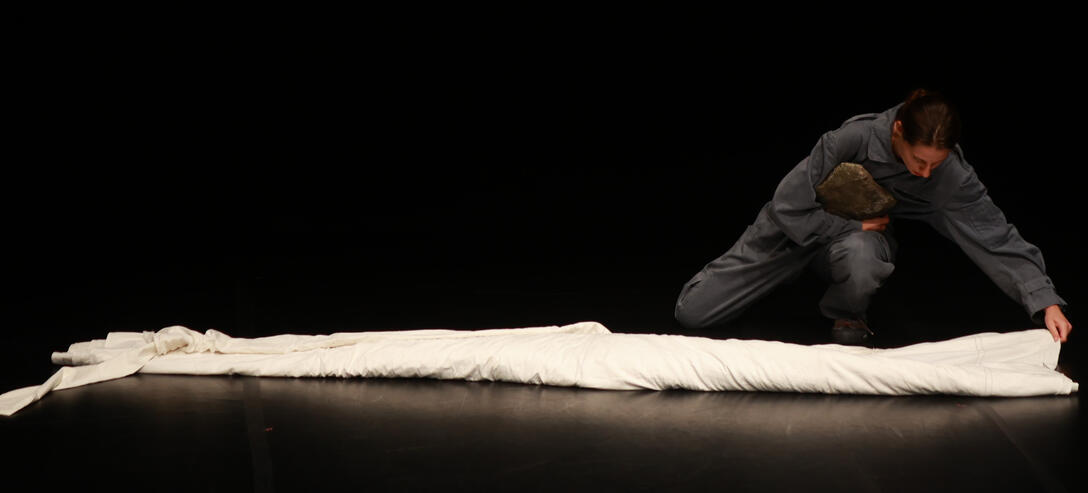
Ana Trif (she/her) is a maker and performer born and raised in Buchraest, Romania; currently based between Italy and France, currently enrolled in the Contemporary Physical Performance Making MA program of the Estonian Academy of Music and Theatre.FORMAL TRAINING[2025 - ONGOING] MA in Contemporary Physical Performance Making, Estonian Academy of Music and Theatre, Tallinn, ES
[2022-2023] One-Year Erasmus Study Exchange, BA Stage Acting, Accademia Nazionale d'Arte Drammatica, Rome, IT
[2022-2024] BA in Stage Acting, Faculty of Theatre and Film, Babeș-Bolyai University of Cluj-Napoca, RO
WHEN I SAID LET'S GET WET I DID NOT MEAN TEARS
LINIA MATERNĂ
Progetto TЯA — Melpignano, Puglia
Residency, May–June 2026Ana Trif is one of sixteen second-year MA students from the Estonian Academy of Music and Theatre's Contemporary Physical Performance Making programme taking part in Progetto TЯA's residency in Melpignano, Puglia, as part of its 2026 edition, Resistenze e Metabolizzazioni, running from 10 May to 6 June.
Il Cuore del Miracolo
Prima dell'inizio della residenza, in aereo, alle cinque del mattino, proprio all'inizio del nostro viaggio verso Melpignano, Giacomo Veronesi ci ha consegnato un volantino intitolato 'Resistenze e Metabolizzazioni: Note per un Incontro a Melpignano'. C'è un passaggio che mi è rimasto impresso:
Cos'è dunque un incontro? — What is an encounter, then?
Un incontro non è un appuntamento. Gli appuntamenti si possono organizzare; gli incontri no. Un appuntamento va più o meno come previsto. Un incontro no. Due persone si incontrano in un momento che nessuno dei due aveva pianificato, e accade qualcosa che nessuno dei due aveva portato con sé.Quindi, quello che praticheremo per primo, a Melpignano, è uscire nei luoghi e aspettare. Non verso persone in particolare — gli incontri possono avvenire con qualsiasi cosa. Il lavoro è soprattutto interiore: mantenere le condizioni che rendono possibile un incontro. Un passo lento. Nessuna commissione da svolgere. Nessun appuntamento che ti richiami indietro. Un compagno che sappia sia proteggerti sia spingerti nell'azione. Un telefono usato solo per documentare.Melpignano provvederà. Le strade, le cucine, i cortili, i gradini davanti alla chiesa — premono i tuoi piedi in una piazza precisa, a un'ora precisa, e allo stesso tempo ti sollevano, un poco, fuori dalle abitudini e dalle routine con cui sei arrivato. Entrambe le cose insieme. Non delicatamente.Dentro l'incontro, i riflessi restano i tuoi. La voce resta la tua. La situazione chiede qualcosa che non avevi portato con te, e la risposta che ne esce è in parte di qualcun altro. Quella risposta è ciò per cui esiste la pratica.Di nuovo, gran parte di questo è lavoro interiore. Fare spazio, dentro di sé, perché un incontro possa atterrare — e non ritrarsi quando accade. È qualcosa che dobbiamo imparare, o recuperare, o rafforzare, a seconda di quanto si sia consumato. Melpignano aiuta. L'atteggiamento è già nelle strade, qui; le persone non sono state disabituate a prestare attenzione a uno sconosciuto. Incontrare quell'apertura alle sue condizioni, e restituirla, sarà gran parte della pratica. Quell'apertura è una delle risorse del luogo.
An encounter is not a meeting. Meetings can be set up; encounters cannot. A meeting more or less goes the way it was planned. An encounter does not. Two people meet a moment neither of them planned, and something happens that neither of them brought.So, what we are going to practise first, in Melpignano, is walking out into places and waiting. Not toward people in particular — encounters can be with anything. The work is internal, mostly: holding the conditions that make an encounter possible. A slow pace. No errand. No appointment that wants you back. A peer who can both keep you safe and throw you into the action. A phone used only for documentation.Melpignano will provide. The streets, the kitchens, the courtyards, the steps in front of the church - they press your feet into a specific square at a specific hour, and they also lift you, a little, out of the habits and routines you arrived with. Both at once. Not gently.Inside the encounter, the reflexes are still yours. The voice is still yours. The situation is asking something you did not bring with you, and the answer that comes out of you is partly someone else's. That answer is what the practice is for.Again, most of this is internal work. Making space, inside, for an encounter to land — and not pulling away from it when it does. This is something we have to learn, or recover, or strengthen, depending on how worn down it has got. Melpignano helps. The attitude is already in the streets here; people have not been trained out of paying attention to a stranger. To meet that openness on its terms, and to reflect it back, is most of what the practice will be. That openness is one of the resources of the place.
La Mia Pratica - My Practice
Mi metto in determinate condizioni. Il miracolo arriva. Lo riconosco. Entro nel cuore del miracolo. Incontro persone. Costruisco legami. Più avanti, posso scegliere di rafforzare quei legami. Coltivo un senso generale di appartenenza.La condizione non è mai stata il miracolo. Ma le condizioni in cui mi sono messa hanno liberato il terreno perché i miracoli potessero arrivare. Non stavo aspettando il miracolo, né lo stavo inseguendo. È impossibile praticare il miracolo, eppure, guardando indietro, è così che descriverei la mia pratica durante tutta la residenza: entrare nel cuore del miracolo.
I put myself in certain conditions. The miracle arrives. I recognise it. I step into the core of the miracle. I encounter people. I build bonds. Later on, I may choose to strengthen the bonds. I nurture a general sense of belonging.The condition was never the miracle. But the conditions I put myself into cleared the ground for miracles to arrive. I was not waiting for the miracle, nor was I chasing it. It is impossible to practice the miracle, yet, with my retrospective mind, this is how I would describe my practice throughout the residency: stepping into the heart of the miracle.
Una Domanda Aperta: Qual è la differenza tra un incontro e un miracolo?
An Open Question: What is the difference between an encounter and a miracle?
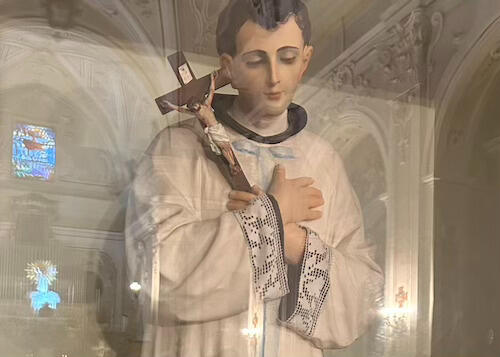
Giacomo ci ha incoraggiati a praticare gli incontri: metterci in determinate condizioni, e poi aspettare ciò che non avevamo previsto. Ogni compito in questa pagina è iniziato così — il lancio di una moneta, un autostop, il giardino di uno sconosciuto.David Hume pensava che un miracolo fosse una legge di natura infranta, e sosteneva, in modo convincente, che non si dovrebbe mai credere che uno sia accaduto — è sempre più probabile che qualcuno si sbagli, o menta, piuttosto che la natura faccia un'eccezione. Ma Ludwig Wittgenstein diceva che chiamare qualcosa un miracolo non riguardava mai il fallimento della fisica. Era un modo di guardare qualcosa — con stupore. Una nascita, un fiore che si apre: cose ordinarie, eppure capaci di travolgerti, se glielo permetti. Nulla si è rotto, quella settimana a Melpignano — il mondo è rimasto esattamente se stesso. Ma certi pomeriggi la luce cadeva in un certo modo su un muro, o uno sconosciuto ha trattenuto il mio sguardo un secondo di troppo, e senza deciderlo, ho lasciato che contasse.Uno dei compiti di questa residenza mi ha portata in una chiesa a scrivere della giornata. Mi sono ritrovata davanti alla statua di un santo — Agostino. Non so perché, ma quella statua mi ha commossa fino in fondo, un brivido mi ha attraversato la schiena e gli occhi mi si sono inumiditi. C'era una somiglianza impressionante tra la statua e uno dei fratelli di mia nonna, scomparso non molto tempo fa.Ho passato il tempo in chiesa a pensare a questo mio parente che è passato all'aldilà; e solo dopo essere uscita dalla chiesa mi sono resa conto che la persona a cui stavo pensando non si chiamava 'Augustin'. Si chiamava 'Angelin'. E 'Augustin' era suo padre, che non ho mai conosciuto.Entrambi questi nomi sono incisi nella mia linea materna. E la loro presenza invisibile è una componente fondante del mio ultimo lavoro — 'Linia Maternă'.Sono andata a cercare negli scritti di Sant'Agostino una prova che la mia pratica fosse una pratica di miracoli, e non di incontri. Naturalmente, un miracolo è un incontro. Ma un incontro, seguito da un senso di assaggiare l'aldilà, è ancora un incontro?Agostino trovò Dio in un giardino a Milano, mentre dei bambini cantavano poco distante una filastrocca, "tolle lege, tolle lege," prendi e leggi, che forse non era nulla, un gioco di strada, se lui non avesse scelto di prenderla come rivolta a sé. E cos'aveva tra le mani se non l'epistola di Paolo ai Romani? La aprì, dunque, e la lesse. E la luce del vangelo inondò la sua anima. Agostino dichiarò: "Oh Signore mio Dio, mia Luce, mia Ricchezza e mia Salvezza."Non so quale sia la differenza tra un incontro e un miracolo, questo resta irrisolto. Tuttavia, se dovessi scegliere, sono tutta per i miracoli e il miracoloso. E la pratica? Entrare disarmata proprio nel cuore del miracolo.
Giacomo encouraged us to practise encounters: put ourselves in certain conditions, then wait for what we didn't plan. Every task on this page started that way — a coin flip, a hitchhike, a stranger's garden.David Hume thought a miracle was a law of nature broken, and said convincingly that you should never believe one happened — the odds are always better that someone's mistaken, or lying, than that nature made an exception. But Ludwig Wittgenstein said that calling something a miracle was never about physics failing. It was a way of looking at something — with awe. A birth, a flower opening: ordinary, and still enough to undo you, if you let it. Nothing broke, that week in Melpignano — the world stayed exactly itself. But some afternoons the light fell a certain way across a wall, or a stranger held my eyes a second too long, and without deciding to, I let it matter.One of the tasks during this residency invited me into a church to write about the day. I found myself standing in front of a statue of a saint — Augustine. I do not know why, but the statue moved me to my core and a shiver passed down my spine and my eyes became watery. It was such a striking resemblance between the statue and one of my grandmother's brothers, who passed away not long ago.I spent the time in the church thinking about this relative of mine who stepped into the beyond; and it was not until I left the church that I realised the person I was thinking about was not called 'Augustin'. He was called 'Angelin'. And 'Augustin' was his father, whom I never met.Both these names are names engraved in my mother line. And their invisible presence is a foundational component of my latest work -- 'Linia Maternă'.I looked into the writings of St. Augustin to look for proof that my practice was a practice of miracles, and not one of encounters. Of course, a miracle is an encounter. But is an encounter, followed by a sense of tasting the beyond, still an encounter?Augustin found God in a garden in Milan, while some children were singing a rhyme nearby, "tolle lege, tolle lege," take it, read it, which might have been nothing, a street game, if he hadn't chosen to take it as addressed to him. And what did he have in his hands but Paul's epistle to the Romans. So he opened it up, and he read it. And the light of the gospel flooded his soul. Augustine declared, "Oh Lord my God, my Light, my Wealth, and my Salvation."I do not know what is the difference between an encounter and a miracle, this remains unresolved. However, if I were to pick, I'm all for miracles and the miraculous. And the practice? To step unarmed right into the core of the miracle.
[coming soon]
Metabolizzazioni: A Practice of Stepping into the Miracle
Progetto TЯA — Melpignano, Puglia
Residency, May–June 2026
Autoritratto in 10 Scatti - Self-Portrait in 10 PhotographsCoin TaskAngel TaskArchivio e AssemblaggioX-to-One
LauraGiovanni
Dita aveva un ammiratore che lavorava in un'azienda che faceva oggetti in pietra leccese. Giovanni Pitardi mi mostrò ogni angolo dell'azienda la mattina in cui andai a trovarlo, mi portò a colazione nel suo paese, mi portò a casa sua e poi alle cave stesse. Più avanti, venne a vedere Linia Maternă. Ora siamo amici.Dita had an admirer who worked a in a company specialised in making objects out of pietra leccese. Giovanni Pitardi showed me every corner of the company the morning I visited, took me to breakfast in his town, brought me to his home and then to the quarries themselves. He came, later, to see Linia Maternă. We are friends now.Samuel Mele
Nella stessa azienda, quel giorno in cui siamo andate a visitarla, un uomo stava scolpendo. Gli dissi che stavo ancora cercando un musicista per lo spettacolo a Palazzo Marchesale. Suo figlio era Samuel Mele. Lo incontrai quella sera stessa, a un concerto, e da allora abbiamo passato molte ore insieme.In the same company, we saw a man was sculpting. I told him I was still looking for a musician for the show at Palazzo Marchesale. His son was Samuel Mele. I met him that night, at a concert, and have spent many hours together since.
Developing a practice of sewing together
When I arrived in Melpignano, I was still at a very early stage of developing Linia Maternă, a new piece I had begun researching during my first semester of Contemporary Physical Performance Studies in Tallinn, Estonia. I had first opened this process to the public in the context of LÄBU Festival 2025, accompanied by talented musician Darja Goldberg. During the Melpignano residency, I was invited to present it as part of Fiorire è il fine, a festival organised by CRACALIA ETS.The work has previously been conceived and performed indoors. In Melpignano, it was going to happen outdoors, in the courtyard of Palazzo Marchesale. This change of context opened up a new question: how could the space hold the performance?The layout of this performance is a family tree composed of stones and laid upon doilies. In moving the work outside, one logistic question arrives first. What happens if the wind blows the doilies away?I began working on a new scenographic element: a big canvas to attach the doilies to. I found large discarded white bedsheets at the Ecocentro di Melpignano. Laura, who became my Melpi-Mommy during the residency, would get calls from the workers at the Ecocentro whenever large pieces of white fabric arrived. You see, I informed as many people as I could about my idea and the welcoming local community was happy to help.I received various deliveries of fabrics from the Ecocentro. Some we used for making X-to-One, and some made it in my scenography.Laura lent me her sewing machine. We first sewed together at her house, and then she brought the machine to mine.For a large part of the residency, I was sewing. The machine lived next to my bed or on the kitchen table. I saw it every day, touched it every day. It was a very new skill for me — I had learned how to use a sewing machine only two weeks prior, during another school residency — and I was excited to have the time and reason to practise it.Sewing became meditative, absorbing, centering. I liked the concentration of the task, but also the satisfaction of being able to see the work progressing: a piece joining another piece, the surface slowly growing, the scenography gradually taking shape.The work was made possible through many people and encounters:
Mona, who patiently taught me how to use a sewing machine — a task which my grandmother failed countless times — and passed me her passion and her impeccable and creative craftsmanship
Laura and Camillo
the workers at the Ecocentro
Louis Touraille, my partner in life and the best stage director I have ever met, although he only does it for me
Giovanni Pitardi and his family
Samuel Mele, who introduced me to the local music scene
Vincent Valente, who joined the performance and played with no more than one prior rehearsal,
Francesca D’Ippolito and Adamo Toma, parents of Cracalla ETS,
and Jüri Nael, who is just as crazy as I am and improbably resourceful, who has generously supported my work and did not let me quit when it was hard to keep on.Each of them became part of the conditions through which this work could happen.
THE SEWING MACHINE
After spending so much time with the machine, I begin to recognise the threads between the sewing world and my artistic practice.TЯA says: “Every residency produces relations before it produces work.”A SEWING MACHINE IS A RELATIONAL MACHINE* thread and fabric
* needle and bobbin
* pressure and movement
* upper thread and lower thread
* machine and body
* separate pieces and a seamA sewing machine produces relations through repeated contact. The work within the residency happenes between people, between materials, between places, between past and present, between domestic and artistic labourA sewing machine is also a small ecosystem: needle, presser foot, feed dogs, bobbin, bobbin case, thread, fabric, motor, hand, foot pedal, tension mechanism
Each element depends on the others. If one element changes, the entire system behaves differently.TENSIONIn the machine
In the material
In the residency
In my work* individual / collective memory
* past / future
* home / migration
* weight / movement
* inheritance / agency
* love / obligation
* archive / lived experience
* domestic labour / artistic production
* inside / outside
* Italy / Romania
* student work / professional performanceTension is the condition that allows the stitch to happen. A stitch requires tension. So does a relation. Too little tension and the stitch loosens; too much and the thread breaks.The feed dogs are the small toothed mechanisms beneath the presser foot that move the fabric through the machine.
You arrive in Melpignano, but Melpignano isn't waiting for you. The ecocentro already exists. Laura already has a sewing machine. The discarded sheets already have histories. The community already has relationships. The Fiorire è il fine festival already exists. The town already has its own rhythms. My family’s repertoire already exists within me. I enter an existing system and work with its feed.discarded material → collected material → stitched material → scenography → archive of bodies → family treeThe sheets aren't neutral. They have already passed through somebody else's life. A bedsheet is also a deeply intimate object: it touches bodies, sleep, domesticity, illness, sex, birth, death, care. The sewing machine becomes the instrument through which discarded domestic material is transformed into a structure for remembering.The sewing machine is a point where care, domestic labour, artistic labour and inheritance intersect. And looking at it from this perspective, is more nuanced than saying that “sewing is traditionally feminine.”THREAD
Memory, stories, ancestry, transmission.
TENSION
The forces that hold or strain a relation.
STITCH
The act of making a connection.
SEAM
The visible trace of a connection between previously separate things.
BACKSTITCH
Moving backwards through archives and memory in order to understand the present.
And then perhaps:
BOBBIN
The hidden labour beneath the visible work.
That last one could be particularly relevant to your experience at TЯA.I spent a lot of this residency inside, working on a piece of scenography.
But this had nothing to do with being isolated, in my experience and understanding. Because I was physically inside, but relationally I was becoming more entangled.
I was inside Laura's house.
Using Laura's machine.
Using materials from the ecocentro.
Making an object about ancestors who migrated to another place.
Preparing a performance for a local festival.
And eventually taking the resulting object outside into the Palazzo Marchesale.I understand my own artistic practice within this residency as an act of stitching: entering an existing fabric, finding its loose threads, allowing different materials and histories to meet, and making relations visible without pretending that the seams disappear.
@anaceatrif
[email protected]